
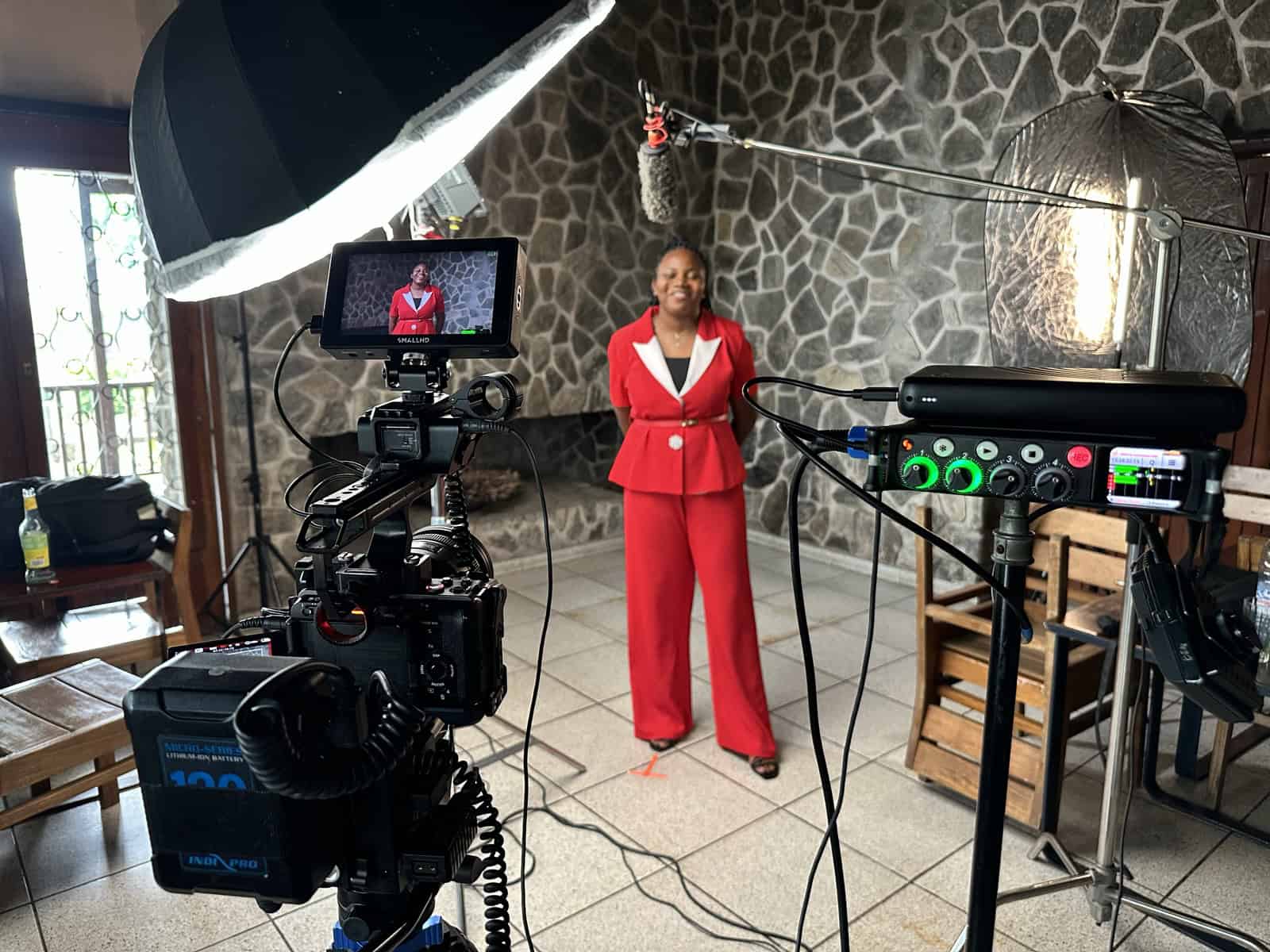
When an international production company asked me to film the 2026 Cartier Women’s Initiative fellows from our region, the brief was simple to say and hard to deliver: four short documentary portraits of women entrepreneurs, in three countries, on a tight travel schedule. We filmed one story in Nigeria, one in Cotonou, Benin Republic, and two in Cameroon, in Buea and Douala.
I worked as director and director of photography, and my team handled the full production on the ground: crew, kit, travel, contributors and local access.
The Fellows We Filmed
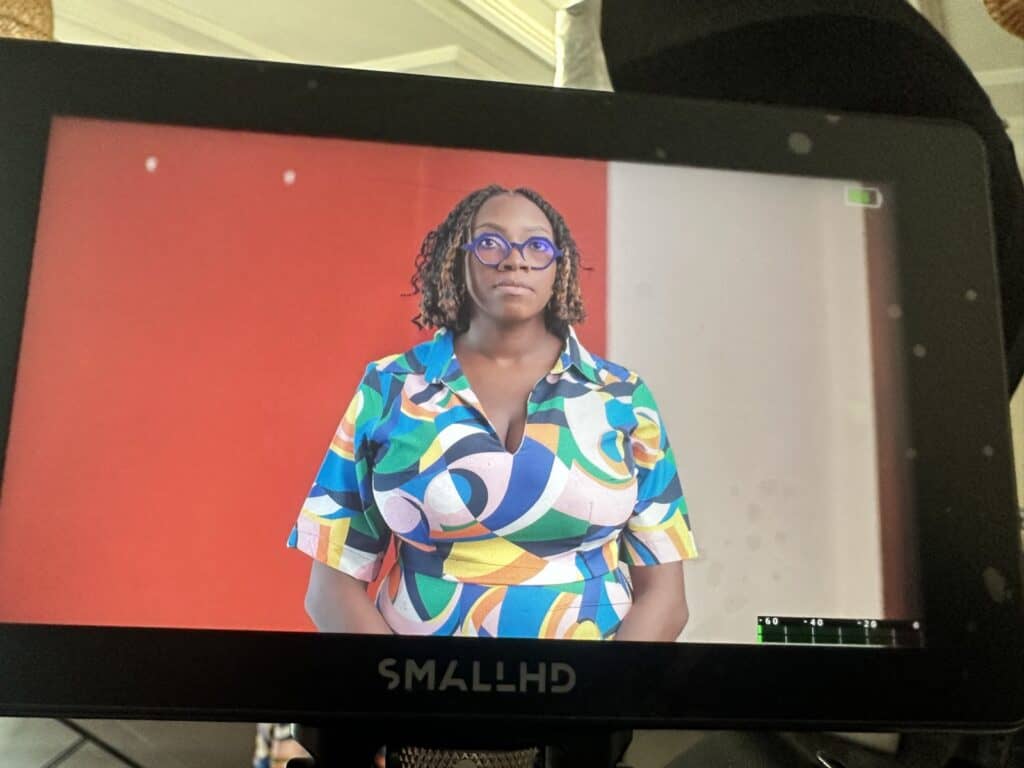
Each film follows a founder whose business is solving a real problem at home. The stories below were filmed by our team, along with the stills on their Cartier fellow pages:
- Mylène Fifamè, Irawo (Cotonou, Benin Republic). An online learning platform that turns theory into job-ready skills for Africa’s workforce.
- Alice Ndeh, Nkwa (Cameroon). A savings and financial-services app that helps market vendors, small businesses and njangi savings groups build a financial record and access small loans.
- Adeline Pelage, Biscuiterie Bobo (Cameroon). A former investment banker who came home to make preservative-free biscuits from local cassava and sweet potato flour, so families can choose locally made snacks over imported ones.
Crew and Kit
We kept the team small and mobile, because we were moving between countries and shooting in homes, offices, markets and production floors:
- Director / DP: Ben Elekwachi
- Sound recordist
- Production assistant
- Stills photographer
- Local fixer in Cameroon
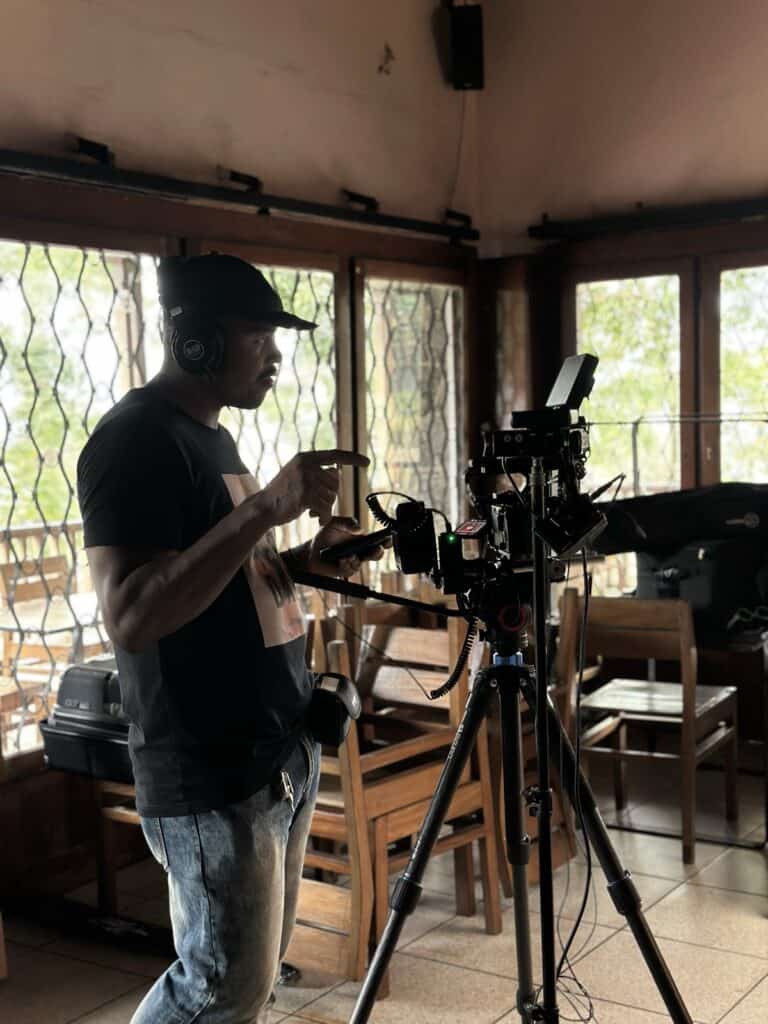
We travelled with a Sony FX3 on a gimbal, a drone, and a set of Sony G Master lenses: 24–70mm f/2.8, 35mm, 50mm and 85mm. A light kit like this lets a small crew move fast through airports and checkpoints while still delivering a cinematic, broadcast-ready image.
Getting There: Lagos to Douala via Abidjan
The biggest logistics challenge wasn’t filming. It was flights. There is no easy direct route from Lagos to Douala, so we flew via Abidjan, and the journey took a full day. We based ourselves in Douala, drove to Buea the next morning for the first Cameroon shoot, then came back to Douala for two more days of filming. In total we spent about five days in Cameroon.
If you’re planning a multi-country shoot in West and Central Africa, build in a full travel day between countries. Routes that look short on a map often need a connection through another hub.
On the Ground in Buea and Douala
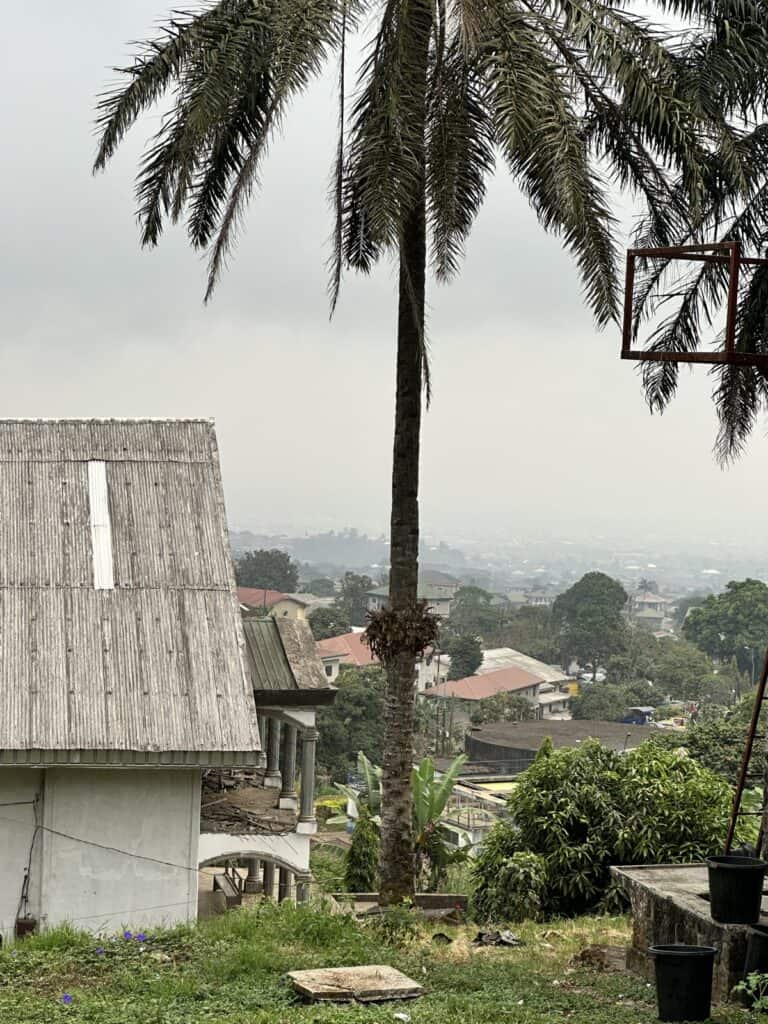
Traffic and the condition of the road between Buea and Douala were our biggest day-to-day problems, and they ate into our shooting time. There was also an ongoing security situation in the area at the time, so the route had frequent military checkpoints.
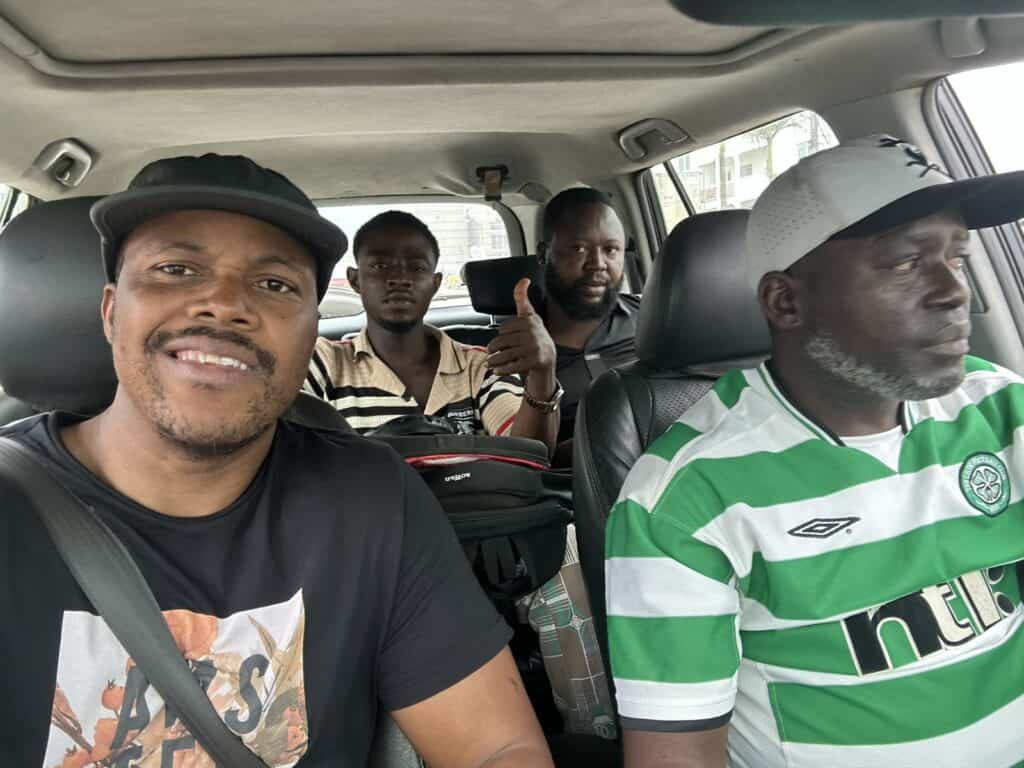
At one point I was taking pictures from the car as we passed what looked like an ordinary house. It turned out to be a military base. We were stopped and my camera was taken. Our local fixer stepped in, explained who we were and what we were filming, and we got the camera back after deleting the last few frames.
It’s the clearest example I can give of why a local fixer matters. On a shoot like this, the person who speaks the language, knows how checkpoints work and can talk calmly to the right people is what keeps the production on schedule.
What This Shoot Taught Us About Filming in West and Central Africa
- Plan the route first. Flights between neighbouring countries often connect through another hub. Budget a full day for each country change.
- Travel light. A compact cinema kit (FX3, gimbal, fast primes and a drone) gets through airports, checkpoints and small locations far more easily.
- Hire a local fixer in every country. Language (French in Benin and Cameroon), checkpoints and community access are where shoots lose time.
- Be careful what you point a camera at. Military and government sites are not always marked. Ask your fixer before shooting anything from a moving vehicle.
- Leave room in the schedule for roads. Distances that look short can take hours, so plan travel days rather than squeezing travel in around shoots.
Filming in Nigeria, Benin Republic or Cameroon?
I work as a DP and director, supply full local crews, and fix productions for international teams across Nigeria and the region. See Film Fixer & Camera Crew in Benin Republic and West Africa and Film Fixer in Nigeria, or send me your brief.